Aperion Audio makes four super tweeters, and they are not simply "good, better, best". Each uses a different driver and, most importantly, each is designed for speakers with a different sensitivity. Pick the wrong one and it will be too loud or too quiet to blend with your system. We compared all four on driver design, speaker matching, power handling and price, using Aperion's published specifications, so you can choose the right model the first time.
Comparison table
| Product | Best for | Score | Buy |
|---|---|---|---|
1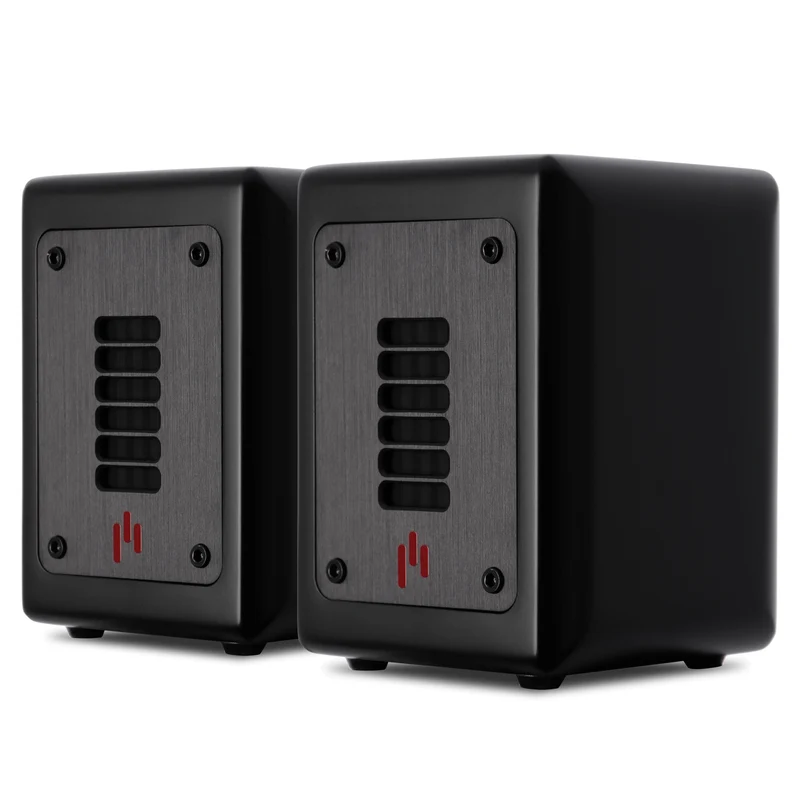 Aperion PST Super TweeterBest Overall & Best Value 5% off: TT05 Aperion PST Super TweeterBest Overall & Best Value 5% off: TT05 |
Most bookshelf and tower speakers (85–94 dB) | 8.8 | $399/pair |
2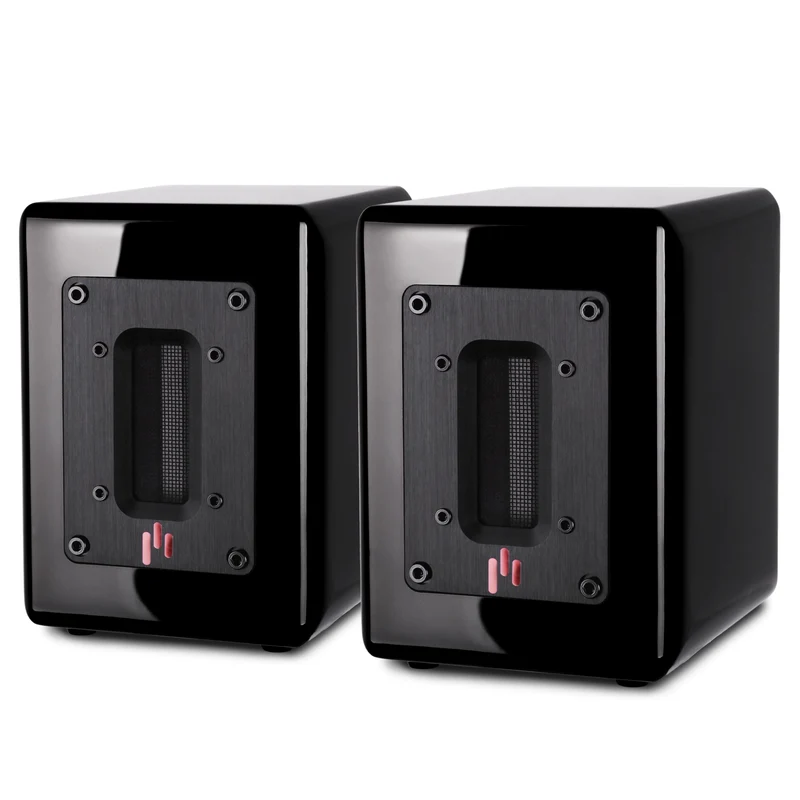 Aperion RST Super TweeterBest Upgrade 5% off: TT05 Aperion RST Super TweeterBest Upgrade 5% off: TT05 |
Listeners who want a true ribbon and a wider speaker match | 8.7 | $649/pair |
3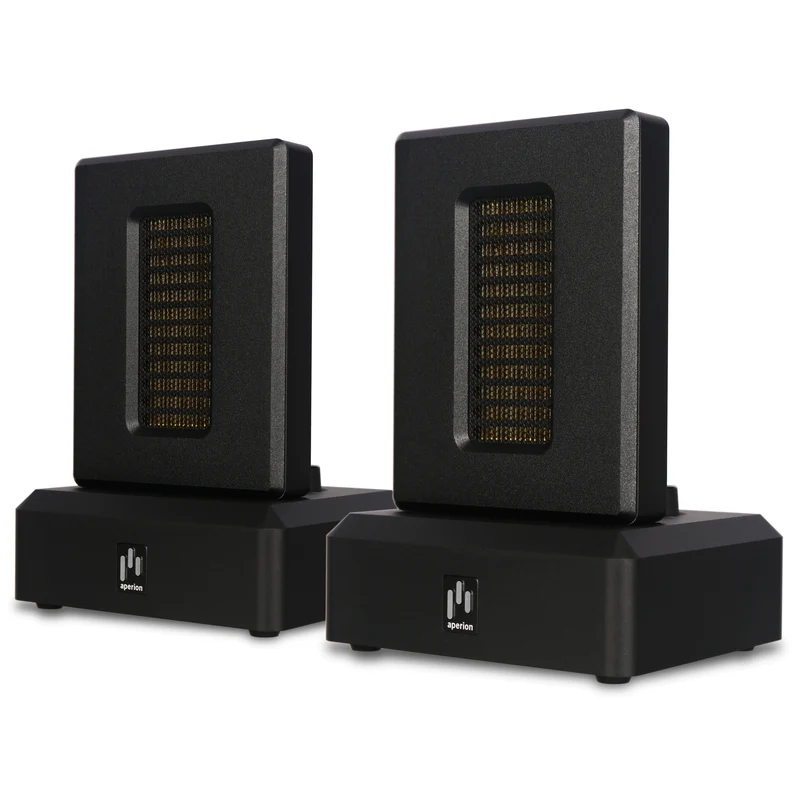 Aperion DST Super TweeterBest for Spacious Sound 5% off: TT05 Aperion DST Super TweeterBest for Spacious Sound 5% off: TT05 |
High-end systems and listeners chasing a bigger soundstage | 8.6 | $999/pair |
4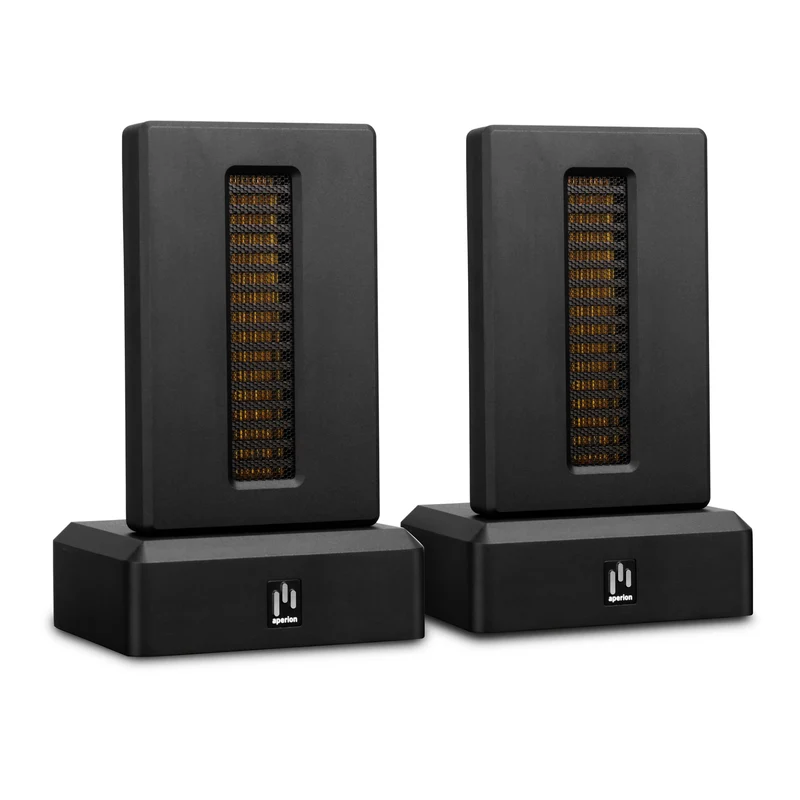 Aperion HST Super TweeterBest for High-Sensitivity Speakers 5% off: TT05 Aperion HST Super TweeterBest for High-Sensitivity Speakers 5% off: TT05 |
Horn and other very efficient speakers (98–103 dB) | 8.3 | $1,599/pair |
Best Overall & Best Value
#1 · Best Overall & Best Value
Aperion PST Super Tweeter
Aperion's best-selling super tweeter uses a planar-magnetic ribbon driver and offers the same crossover and treble controls as the pricier models for $399 a pair. For most home systems, it is the one to start with.
Best for: Most bookshelf and tower speakers (85–94 dB)
Pros
- Lowest price in the range
- Planar-magnetic ribbon driver up to 40 kHz
- Same 5-point crossover and treble trim as pricier models
- Compact and light (1.7 lb each)
Cons
- Narrowest sensitivity match (85–94 dB)
- Less output headroom than RST and DST
- Driver
- Planar-magnetic flat ribbon
- Speaker match
- 85–94 dB
- Frequency response
- 8–40 kHz
- Recommended power
- 10–100 W
Best Upgrade
#2 · Best Upgrade
Aperion RST Super Tweeter
The RST steps up to a true 3-inch aluminum ribbon only 20 μm thick, with 96 dB sensitivity that matches a wider range of speakers than the PST. A sensible upgrade if your speakers are slightly more efficient or you want a larger, heavier unit.
Best for: Listeners who want a true ribbon and a wider speaker match
Pros
- True aluminum ribbon driver
- Wider speaker match (85–96 dB)
- Up to 40 kHz
- Gloss Black, Pure White, Gloss Cherry and Stealth Black finishes
Cons
- $250 more than the PST
- Larger and heavier (3.9 lb each)
- Stealth Black listed as pre-order at the time of writing
- Driver
- 3-inch aluminum ribbon (20 μm)
- Speaker match
- 85–96 dB
- Frequency response
- 8–40 kHz
- Recommended power
- 10–100 W
From$649/pair
Check Price on Aperion Audio
Best for Spacious Sound
#3 · Best for Spacious Sound
Aperion DST Super Tweeter
The DST uses a dual-firing Air Motion Transformer (AMT) in an open-baffle design. Aperion highlights its quick dynamics and clear transient response, and it handles more power than the PST and RST.
Best for: High-end systems and listeners chasing a bigger soundstage
Pros
- Air Motion Transformer driver
- Dual-firing open-baffle design
- Higher power handling (10–150 W)
Cons
- Expensive at $999 a pair
- 4 Ω load is harder on some amplifiers
- Only one finish option
- Driver
- Dual-firing AMT ribbon
- Speaker match
- 87–96 dB
- Frequency response
- 8–40 kHz
- Recommended power
- 10–150 W
From$999/pair
Check Price on Aperion Audio
Best for High-Sensitivity Speakers
#4 · Best for High-Sensitivity Speakers
Aperion HST Super Tweeter
The HST exists for one job: matching very efficient speakers that the other three models are too quiet for. With 103 dB sensitivity and 250 W power handling, it is the only Aperion super tweeter for horn-loaded and high-efficiency designs.
Best for: Horn and other very efficient speakers (98–103 dB)
Pros
- Only Aperion model for 98–103 dB speakers
- Highest power handling (10–250 W)
- Dual-firing AMT driver
Cons
- Most expensive at $1,599 a pair
- Wrong choice for typical 85–94 dB speakers
- Lower upper limit (30 kHz) than the other three
- Driver
- Dual-firing AMT ribbon
- Speaker match
- 98–103 dB
- Frequency response
- 8–30 kHz
- Recommended power
- 10–250 W
From$1,599/pair
Check Price on Aperion AudioHow we chose and ranked them
Because all four models come from the same brand and share the same core features, we focused on what actually separates them: driver type, speaker sensitivity match, power handling, size and price. All information comes from Aperion's official product pages as of October 2026. We ranked them by how well they suit the typical home listener, which is why the most affordable PST comes first, and gave each model a "best for" badge for the buyer it suits best.
What all four have in common
Every Aperion super tweeter shares the same easy-to-use features:
- 5 crossover points: 8, 10, 12, 14 or 16 kHz, plus OFF, with a 12 dB/octave slope.
- Treble adjust from 0 to −5 dB in 1 dB steps.
- No extra amplifier needed: each connects to your speaker's existing binding posts.
- 3-year cabinet and driver warranty with lifetime support, a 30-day in-home audition (returns carry a 10% restocking fee) and free shipping in the continental U.S.
So the real question is not which one has more features, but which one matches your speakers.
Buying guide: how to choose the right model
1. Match your speakers' sensitivity
This is the most important step. A super tweeter needs to play at roughly the same level as your main speakers to blend in. Aperion publishes a matching range for each model:
| Your speaker sensitivity | Recommended model |
|---|---|
| 85–94 dB (most bookshelf & tower speakers) | PST (best value) or RST |
| 94–96 dB | RST or DST |
| 98–103 dB (horn & high-efficiency speakers) | HST |
You will find sensitivity in your speaker's specifications, usually written as "dB (2.83 V/1 m)" or "dB/W/m".
2. Consider the driver type
- Planar-magnetic ribbon (PST): a thin film with printed aluminum conductors. Light, detailed and affordable.
- True aluminum ribbon (RST): an ultra-thin 20 μm aluminum strip. The classic ribbon design.
- Air Motion Transformer (DST, HST): a pleated diaphragm in a dual-firing open-baffle design, which Aperion highlights for fast transients.
3. Check your amplifier
The DST is a 4 Ω load, which is harder for some budget amplifiers to drive. The PST and RST are 6 Ω, and the HST is 8 Ω. If you are unsure, check your amplifier's minimum impedance rating.
4. Set your budget
Prices range from $399 (PST) to $1,599 (HST) per pair. For most people, the PST delivers the core benefit of a super tweeter at the lowest cost, and the 30-day in-home audition lets you test it before committing.
Tip: Whichever model you choose, start with the crossover at 14 kHz and the treble at −2 dB, then adjust one step at a time. Read our full Aperion PST review for more setup advice.