A Stirling engine is a small heat engine that turns a temperature difference into motion, and watching one spin is a fascinating way to see physics in action. NikolaToy sells more than a dozen models. We picked five that cover the main types, from a $30 classic starter to models that generate electricity and a decorative retro fan, and ordered them from entry-level to premium. Details come from NikolaToy's product pages and photos as of October 2026.
Comparison table
| Product | Best for | Buy |
|---|---|---|
1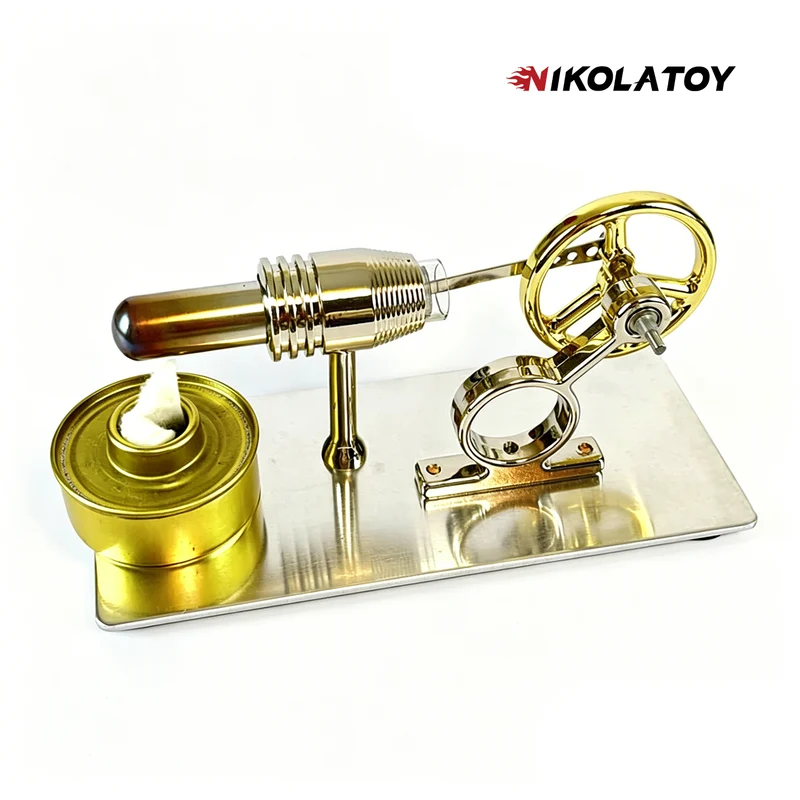 NikolaToy Stirling Engine Model – Classic VersionBest Budget Starter NikolaToy Stirling Engine Model – Classic VersionBest Budget Starter |
Kids (with supervision) and first-time Stirling owners | $29.99 |
2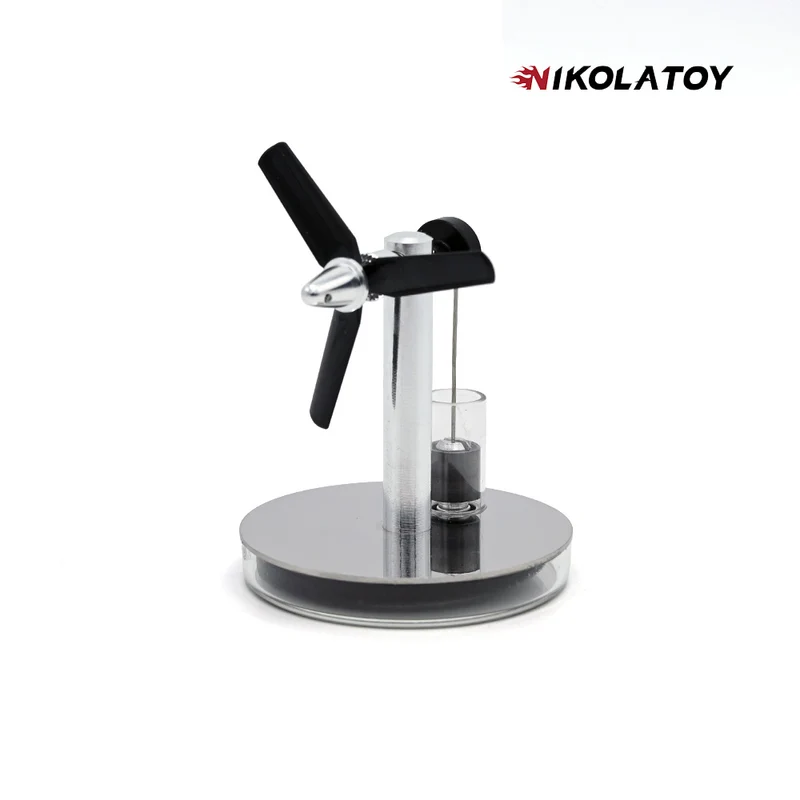 NikolaToy Temperature Difference Stirling Engine Cup CoverBest No-Flame Option NikolaToy Temperature Difference Stirling Engine Cup CoverBest No-Flame Option |
Office desks and coffee lovers | $39.90 |
3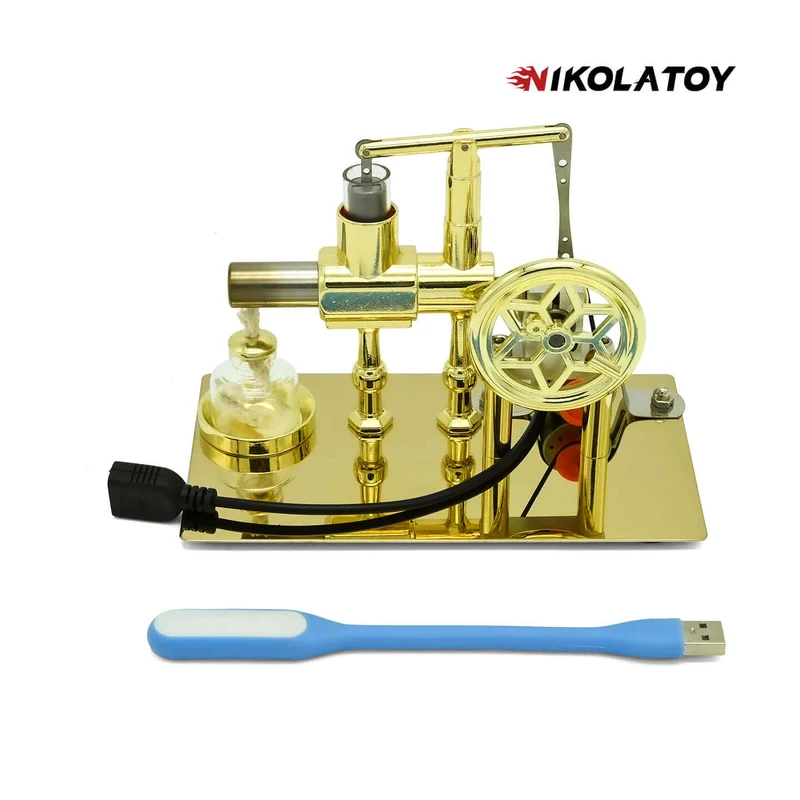 NikolaToy Stirling Engine with Power Generation and Indicator LightBest First Generator Model NikolaToy Stirling Engine with Power Generation and Indicator LightBest First Generator Model |
Students learning about energy conversion | $49.90 |
4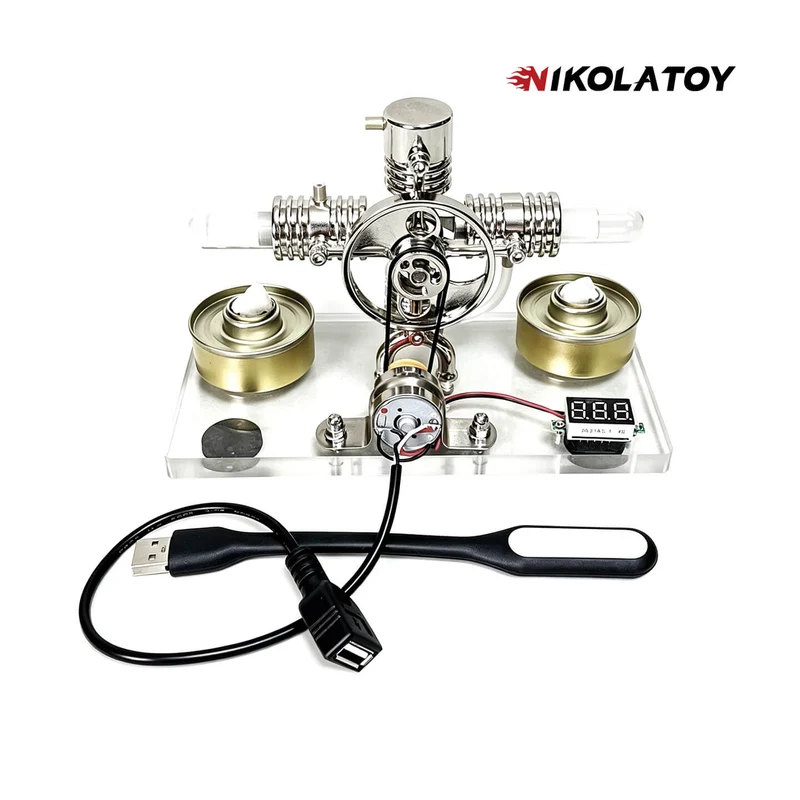 NikolaToy Cross Twin Stirling Engine with Generator and VoltmeterBest for Experiments NikolaToy Cross Twin Stirling Engine with Generator and VoltmeterBest for Experiments |
STEM projects that measure output | $68.99 |
5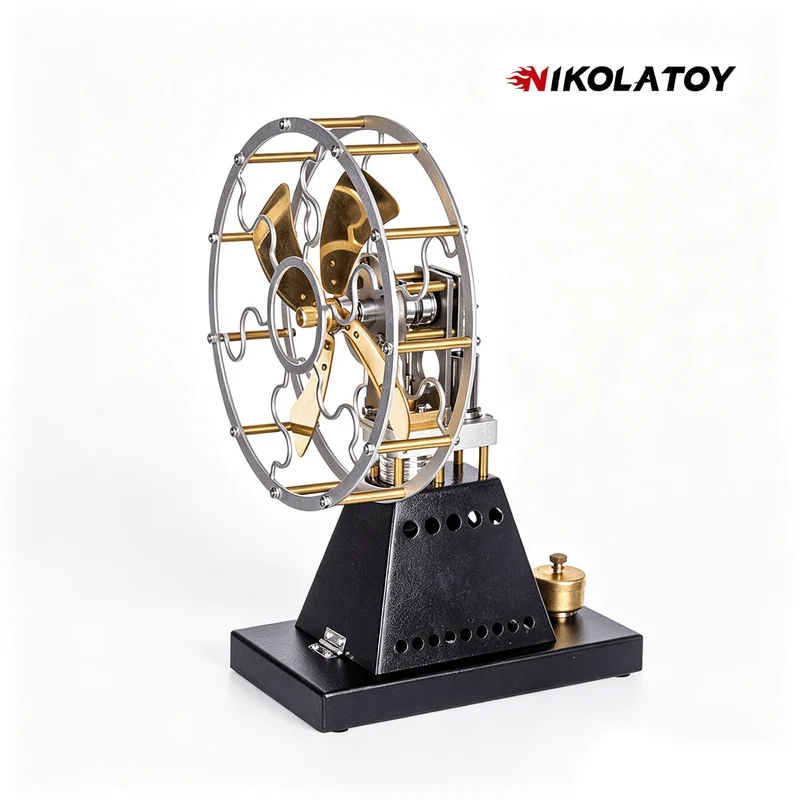 NikolaToy Stirling Engine – Retro FanBest Decorative NikolaToy Stirling Engine – Retro FanBest Decorative |
Collectors and vintage-style décor | $165 |
Best Budget Starter
#1 · Best Budget Starter
NikolaToy Stirling Engine Model – Classic Version
A simple single-cylinder model that NikolaToy describes as an ideal tool for children to learn how a heat engine works. The product photo shows it with a small alcohol burner and flywheel on a metal base.
Best for: Kids (with supervision) and first-time Stirling owners
Pros
- Lowest price in this list
- Simple design that's easy to understand
- NikolaToy says it's easy to assemble
Cons
- Runs on an open flame; adult supervision needed
- Very little technical detail on the product page
- Type
- Single-cylinder Stirling engine
- Heat source
- Alcohol burner (shown in photo)
- Price
- $29.99 (was $45)
From$29.99
Check Price on NikolaToy
Best No-Flame Option
#2 · Best No-Flame Option
NikolaToy Temperature Difference Stirling Engine Cup Cover
A low-temperature-difference Stirling engine with a propeller and mirror-finish base, designed to sit on a hot drink. NikolaToy's description: 'Appreciate the rotation of the propeller while making coffee.'
Best for: Office desks and coffee lovers
Pros
- No open flame needed
- Fun everyday desk toy
- Mirror-finish base
Cons
- Needs a hot drink or warm surface to run
- Minimal product description
- Type
- Low-temperature-difference Stirling engine
- Heat source
- Hot cup / warm surface
- Price
- $39.90
From$39.90
Check Price on NikolaToy
Best First Generator Model
#3 · Best First Generator Model
NikolaToy Stirling Engine with Power Generation and Indicator Light
Adds a small generator and indicator light, so you can see heat energy turned into electricity. NikolaToy says it needs no battery or USB connection and uses bearing elements for durability.
Best for: Students learning about energy conversion
Pros
- Shows heat-to-electricity conversion
- No battery or USB needed
- Bearing elements, per NikolaToy
Cons
- Heat source details not specified on the page
- Type
- Stirling engine + generator
- Output
- Indicator light
- Power
- Heat only; no battery
- Price
- $49.90 (was $75)
From$49.90
Check Price on NikolaToy
Best for Experiments
#4 · Best for Experiments
NikolaToy Cross Twin Stirling Engine with Generator and Voltmeter
A twin-cylinder 'cross' engine with a power generation device, indicator light and voltmeter to measure output. The product photo shows two burners and a USB lamp.
Best for: STEM projects that measure output
Pros
- Voltmeter lets you measure output
- Twin-cylinder design
- Power generation device to boost output, per NikolaToy
Cons
- Two open-flame burners; supervision needed
- Larger footprint
- Type
- Cross twin Stirling engine + generator
- Measurement
- Voltmeter + indicator light
- Power
- Heat only; no battery
- Price
- $68.99 (was $99)
From$68.99
Check Price on NikolaToy
Best Decorative
#5 · Best Decorative
NikolaToy Stirling Engine – Retro Fan
An antique-style fan powered by a Stirling engine, with no electrical components. It runs on alcohol or kerosene fuel or on heat sources such as wood stoves, with a working temperature above 110 °C.
Best for: Collectors and vintage-style décor
Pros
- Striking vintage design
- No electrical components
- Can run on a wood or coal stove, per NikolaToy
Cons
- Most expensive in this list
- Needs a hot heat source above 110 °C
- Type
- Stirling-powered fan
- Size
- 7.09 × 7.09 × 10.63 in
- Heat source
- Alcohol, kerosene, wood/coal stove
- Price
- $165 (was $179)
From$165
Check Price on NikolaToyHow we chose
NikolaToy sells more than a dozen Stirling and steam engine models. Because product descriptions vary a lot in detail, we chose five models with enough published information to describe accurately, covering each main type: a classic starter, a no-flame cup model, a generator model, a measurement model and a decorative piece. They are listed from entry-level to premium; we do not score them against each other because they serve different purposes.
Quick comparison
| Model | Heat source | Makes electricity? | Measures output? | Price |
|---|---|---|---|---|
| Classic | Alcohol burner | Not specified | No | $29.99 |
| Cup Cover | Hot drink | No | No | $39.90 |
| Power Generation + LED | Heat (source not specified) | Yes (LED) | No | $49.90 |
| Cross Twin + Voltmeter | Alcohol burners (shown) | Yes | Yes (voltmeter) | $68.99 |
| Retro Fan | Alcohol, kerosene, stove | No | No | $165 |
How to choose a Stirling engine model
1. Flame or no flame?
Most Stirling models run on a small alcohol burner, which means an open flame and a hot cylinder. If you want something for an office or a home with young children, a low-temperature-difference model that runs on a hot drink is the simpler choice.
2. Just motion, or electricity too?
Basic models simply spin a flywheel. Generator models turn that motion into a small electrical output that lights an LED, which makes the energy conversion visible, and the Cross Twin adds a voltmeter so you can measure it, great for school projects.
3. Learning tool or décor?
The Classic and generator models are best for learning. The Retro Fan is primarily a decorative showpiece that happens to run on heat.
Safety tips
- Use alcohol burners on a stable, heat-resistant surface, away from anything flammable.
- Let the engine cool before touching the hot cylinder.
- Children should only run flame-powered models with adult supervision.
Buying tips
NikolaToy offers free standard shipping and advertises a 1-year warranty and parts replacement service, but its return terms aren't consistent across the site. Confirm them before buying, and read our full NikolaToy review. Torn between the two generator models with meters? See our Cross Twin vs Mirror Polished Stirling engine comparison.